|
|
|
Members
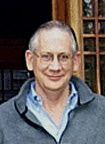
Alan J. Berkowitz
Alan Berkowitz has a PhD in Classical Chinese Language and Literature from the
University of Washington, in Seattle, and currently is Associate Professor of Chinese
at Swarthmore College, Section Head of Chinese, and Chair of the Asian Studies Program.
Alan has lived in China and Taiwan for extended periods, especially Nanjing, Beijing, and
Taipei. He has traveled throughout many regions of China, following the traces of
celebrated men of yore deep into the remote mountains they called home. He dabbles at
playing the qin and claims that his enthusiasm far exceeds his accomplishment, but his
appreciation of the instrument is deep, and his interest longstanding.
Alan's primary research interests span Chinese culture of the Han through Tang periods, that is the
first eight centuries of our common era. He recently published Patterns of Disengagement:
The Practice and Portrayal of Reclusion in Early Medieval China (Stanford, 2000) and is
working on the role of biography and hagiography in medieval China. He is also editor of a series of
books on exemplary conduct in traditional Chinese culture and is at work on a collaborative
project concerning the German polymath G. W. Leibniz and his association with the French
Jesuits at the Chinese court in the late 17th and 18th centuries. Alan is president of the
Early Medieval China Group, is book review editor for the journal Early Medieval China,
and serves on the board of the T'ang Studies Society.
|
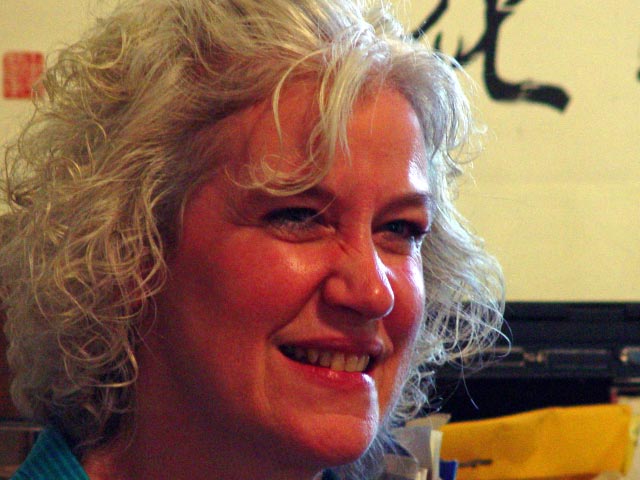
Peiyou Chang
Peiyou Chang was born in Taipei, Taiwan. At age 3 her father sat her in front of a piano and there began her musical education. At age 8 she studied the Guzheng. However she gave up both piano and Guzheng while under the pressure of entering college. At age 30, the 3rd year after she moved to New York, she revived her musical life with the love of Guqin music. She has been playing and studying the Guqin since 2000, and is most
influenced by Master Wu Zhao-Ji (1908-1997) from Suzho, China. She was taught initially by Mr. Yuan Jung-Ping.
Peiyou has participated in numerous qin performances and activities in
New York, Taiwan and China, and now is fully devoted to Guqin music
reconstruction, composition, promotion and performance both solo
and ensemble. She has created a Guqin website www.peiyouqin.com to promote the instrument.
|
Ian Duncan
Ian Robertson Duncan is a painter, poet and qin player who recently moved from New York City to the Catskill Mountains, a couple hours north of the city. He studied Art, Philosophy and Literature at Bowdoin College before moving to New York in 2001. In 2007 he became a student of Taiji, Qigong, and the Dao under Master Zhongxian Wu. In 2008 he became a student of Qin Dao under Master Li Mingzhong.
|
Stephen Dydo
Stephen Dydo (DMA, Columbia), president of the New York Qin Society from 2004-2014, has performed qin in concerts in the US, England, Europe, and China. He also is a composer, classical guitarist, teacher, and author of numerous books and articles on music;
his compositions have been played by concert organizations across the US and Europe. His specialization is in sacred music for both Western and
Buddhist rites. Currently, he is adapting Tang dynasty music for modern performance. He has also written several software programs for teaching music.
A further passion is the construction of musical instruments, including lutes, qin, and electric qin and pipa. He studied qin and calligraphy with
Jungping Yuan and plays on a qin he built. Recent performances have included sound and image installations in collaboration with the painter Susan Haire
(London and Westchester) and a performance of a concerto for pipa and Chinese orchestra at the British Museum.
His website is www.dydomusic.com.
|
Matthew Flannery
Matthew Flannery is an independent scholar in New Brunswick, NJ, who writes occasionally
on the arts. He has been trained in philosophy and urban planning at Reed College, the
University of Chicago, and Rutgers University. For a number of years, he has studied
Chinese poetry and calligraphy with Prof. Leon Chang.
Flannery's enthusiasm for the arts is especially evident in his knowledge of music and
his extensive collection of musical recordings. He is also an avid collector of
contemporary calligraphy, focusing on seal carvers and men of letters.
|
Rebecca Flannery
Harpist Rebecca Flannery has appeared as a chamber
musician throughout Europe and the United States, notably Carnegie Recital
Hall, Lincoln Center, and WQXR. She was a founding member of Chrysolith
(harp, flute, viola, soprano), the Chamber Musicians’ Alliance and other
chamber groups with which she has appeared on television and radio in both
the US and Europe. Immediately upon receiving her Master of Music from the
Yale School of Music, Ms. Flannery was appointed to the teaching position in
harp at The Hartt School of Music, University of Hartford, a post she
continues to hold. She gives master classes regularly across North America.
Most recently, Ms Flannery has begun writing and publishing her own
compositions for harp. Her recordings include This Son So Young (soprano,
organ and harp) and Dreams and Fantasies (flute and harp) on the Towerhill
label. For her website, please visit here.
|
Yuni Han
Yuni Han is a Korean born in Japan who has been living in New York since 1986 after graduating from University of Wisconsin with MBA. Yuni was introduced to guqin music by her qigong teacher, Wu, Zhong-Xian, in 2008. It resonated within her core and she felt guqin is her destination in her Dao cultivation along with her 10-year taiji and qigong practice. Yuni greatly appreciates her first teacher, John Thompson, for introducing her to silk string guqin, and other help from Stephen Dydo and Peiyou Chang.
In 2009, Yuni co-established “Chung Dao Tang (中道堂)” with Master Jung-Ping Yuan in Catskill, New York, as a space to promote guqin tradition and to practice Qin Dao (琴道). She has organized Guqin Workshops with Master Jung-Ping Yuan in winter and summer in 2010. She is also a student of Master Yuan for guqin and calligraphy. Chung Dao Tang (中道堂)will be open for guqin gatherings and other dao cultivation. If interested in the use of ChungDaoTang, inquire at: [email protected]
|
Ralph Knag
Ralph Knag is an admirer of Chinese music and a current Guqin student under Peiyou Chang.
He also studied Guzheng with Susan Cheng - the founder of the "Music from China" ensemble.
Ralph's musical interests are broad - with an emphasis on world music and jazz.
Professionally Ralph is a researcher in telecommunications.
|
Bun-Ching Lam
Bun-Ching Lam was born in Macao and holds a Ph.D. in Music Composition
from the University of California at San Diego. She taught at
Cornish College of Arts in Seattle for five years before moving to New York,
where she still lives and works. She has received numerous awards including
a Rome Prize, two NEA grants, fellowships from the American Academy of Arts
and Letters and the New York Foundation for the Arts. She has been
commissioned by the American Composers Orchestra, Bang On a Can Festival,
Ursula Oppens, and the Arditti String Quartet . Her opera "Wenji-
Eighteen Songs of the Nomad Flute";, in which the Qin was featured
prominently, was premiered last year at the Asia Society and the Hong Kong
Arts Festival. Bun-Ching Lam's work has been recorded on CRI, Tzadik,
Nimbus, and Koch International. Her website is www.bunchinglam.com.
|
Bo Lawergren
Bo Lawergren received an undergraduate degree from University of Uppsala and a PhD
(Nuclear Physics, 1964) from The Australian National University in Canberra. He settled
in New York as a Professor of Physics at Hunter College (CUNY) where he is also active as
a composer with compositions played on four continents.
Another interest began two decades ago with the study of Music Archaeology and Acoustics,
fields that focus on musical artifacts and theories during a long period (3000 BCE to 1500
CE) across a vast region (the Mediterranean to China). Lawergren's research has resulted
in about 50 scholarly articles, including many entries on ancient music in The New Grove
Dictionary of Music and Musicians (published 2001 in 29 volumes), The Oxford Encyclopedia
of Ancient Egypt (2001, 2 volumes), and Die Musik in Geschichte und Gegenwart (1994-99, 9
volumes). When the string instruments from the tomb of Marquis Yi of Zeng (433 BC) were
first exhibited outside China in 2000, he wrote the first analysis of them (qin, se, and
zhu) in a Western language (see Music in the Age of Confucius, ed. Jenny F. So). Further
research on the earliest phase of the qin appears in his article "The Metamorphosis of
Qin-zithers, 500 BCE - 500 CE", Orientations, May 2003.
|
Peter Reis
Peter has had careers in international corporate law as well as a
25-year career as a Commander in the US Navy. He now devotes much of his time to harps, both as a collector of
antique instruments and in his business, Harps International. One of his prize acquisitions was loaned by him
to the Metropolitan Museum, NYC, where it was on display for five years and used in several concerts. Peter
has made and continues to make a serious study of the history of the harp. He has long held a serious interest in
the culture and art, including music, of Asia, especially China and Japan, which has led to several trips to
Asia.
|
Elaine
Sheng
Elaine Sheng has studied qin and Chinese history and
culture generally. She serves on the Board of the New York Wellesley Club and the
advisory committee for Asia Society Young Patrons Asia Circle. She enjoys
travel, most recently to Bhutan, Berlin, Budapest, Bangladesh, Beijing... you can see the pattern. She currently works in the cosmetics industry.
|
Tomoko Sugawara
Tomoko Sugawara (born in Tokyo, Japan) took up the Irish harp at age twelve and the grand harp at
sixteen. She graduated from Tokyo University of Fine Arts as a harp student of Ms. Sumire Kuwajima. Since 1991, she also plays replicas of the angular
harp (Chinese konghou; Japanese kugo), which flourished in the Far East 500 - 1100 CE. She has given numerous solo recitals on both the concert harp and
the kugo at major venues including Seventh World Harp Congress (Prague 1999); Indiana University (2003); The Shosoin Exhibition (Nara 2003);
Fifth Symposium for Music Archaeology (Berlin 2006); Columbia University, Harvard University, University of Pennsylvania, Women's University of Japan
(all in 2007); Princeton University; Tenth World Harp Congress, Amsterdam (both in 2008) - and she plays with a number of orchestras in Japan.
Victor (Tokyo) has issued her solo CD, "Believe Me, If All Those Endearing Young Charms" (1996), and her harp + saxophone improvisations can be
heard on the CD, "East Meets West" (1998).
Many composers have dedicated kugo compositions to her, and several makers have built her angular harps.
Currently, she is a Fellow of the Asian Cultural Council and a grantee of the Rohm Foundation. For her website, please visit www.kugoharp.com
|
John Thompson
John Thompson, current President of the New York Qin Society, began in 1974 to study qin in Taiwan from
Sun Yü-Ch'in, then while living in Hong Kong from 1976 to 2001 began reconstructing old melodies from Ming dynasty handbooks, in particular Shen
Qi Mi Pu (1425) and Xilutang Qintong (1525). He moved to New York in 2001, returned to Asia (Mumbai and Singapore) from 2009 to 2013, then came back to New York in 2013, all the time continuing his project of qin performance and research. His website, www.silkqin.com, with over 150 recordings of his reconstructions from Ming dynasty scores plus a wealth of related information about the qin, focuses on "historically informed qin performance" (requiring use of silk strings and accurate descriptions of historical details), and is arguably the richest resource for information on the qin on the Internet.
|
B.C. Vermeersch
In a career that spans more than four decades, Dr. B.C. Vermeersch has achieved recognition as an arts and music educator in both the public and private sector. He is also a producer of public programs and concerts and a trusted administrator of non-profit and philanthropic groups.
He was Director of Greenwich House Music School for over twenty-five years and currently serves as Executive Director of the Musicians Foundation. He holds bachelors and masters degrees from Wayne State University, Detroit, and a Ph.D. from the University of California at Santa Cruz. He also earned a Certificate from the Columbia University Institute for Not-for-Profit Management. He was born and raised on Detroit’s east side. For more about B.C. Vermeersch, please visit www.vermeersch.com.
|
Marilyn Wong Gleysteen
Marilyn Wong Gleysteen is an art historian and a fourth-generation Chinese born in Hawaii,
where as a child she studied piano and viola. After graduating from Mount Holyoke College,
she entered the program in Chinese Art & Archaeology at Princeton University, where she
received her doctorate in 1983. From 1966-68 she worked at the Palace Museum in Taipei,
where she made a brief start at learning the qin with Wang Chen-hua. From 1973-75 she was
assistant curator of Chinese art at the Metropolitan Museum in New York and later taught at
Yale, George Washington University, the University of Virginia, Columbia University in the
City of New York, the University of Maryland, and Georgetown University. Her publications in
Chinese painting and calligraphy include co-authoring Studies in Connoisseurship (1973) and
Traces of the Brush: Studies in Chinese Calligraphy (1977).
Appreciation of Chinese art is still her major pastime, but she has retired from academic
research and full-time teaching to pursue her interests in music, dance, and opera. In 1999
she attended the symposium accompanying "Resonance of the Qin" and the next year decided
to begin serious study of the guqin with Yuan Jung-ping. Her qin-related activities include
acting as corresponding secretary of the New York Qin Society. In 2002 she performed at the
Second Annual Jiangsu Province Qin Conference, participating in the fall trip with society members,
as well as visiting qin players in Hong Kong. In October of 2004, Dr. Gleysteen was invited to perform
the guqin at the Library of Congress to celebrate the Tenth Anniversary of the Asian American
Association of the Library. In the summer of 2005, she traveled to Beijing, where she met the qin-maker
Wang Peng 王鵬 and paid a call on the connoisseur and
antiquarian Wang Shixiang 王世襄 , whom she asked to inscribe the name 玄蘊 on her new qin.
|
Judy (Shih-hua) Yeh
Shih-Hua (Judy) Yeh, Taiwanese, is specialized in multiple Chinese instruments: guqin, guzheng, and nanguan chamber instruments. She started to learn the guqin and guzheng with Mrs Mei-Rong Zong, who studied the guqin with master Zong-Han Wu.
In 1999, she entered the Taipei National University of the Art (TNUA), where she practiced guqin as her major instrument in the department of traditional music. While she studied the guqin from professor Hai-Yan Wang; she also studied the nanguan chamber music, including pipa, xiao, erxian, sanxian, and singing under Hong-Ming Zhang and Qin-Yuan Cai.
A year after receiving her bachelor's degree in 2003, she was also awarded a Master's degree in ethnomusicology from Sheffield University in the United Kingsom.
She was a member of 'Water Stage Ensemble' based in TNUA and has performed nation wide in Taiwan, UK and US. Aside from performing, she has taught at the Jinwen University of Science and Technology.
Since 2008, she has been resident in New York City and started teaching guzheng and guqin. She is now working on her first CD of traditional guqin pieces. In the future, she hopes to perform the guqin in different types of art, such as drama, dance...etc.
|
Mingmei Yip
Mingmei Yip was born and grew up in Hong Kong and since 1992 has resided in the United
States. She received her Ph. D. in musicology from the University of Paris, Sorbonne,
and subsequently was appointed lecturer in music at the Chinese University of Hong Kong and
later senior lecturer (associate professor) at Hong Kong Baptist University.
Yip has lectured widely on and performed the qin at Oberlin Conservatory, the Cleveland
Museum of Art, Cleveland Orchestra Women's Association, the University of Paris, Oxford
University, and the China Institute in New York. Her publications include numerous articles
and books, among them The Art of Qin Music, Qin Music and Chinese Culture, The World of
Music, Never Poles Apart (short stories and essays), and Good Time on Earth (essays on
Zen Buddhism illustrated by her own paintings and calligraphy). A sixth book, Qin Music
and Zen Buddhism, has been accepted for publication in Taiwan. She had a one person show
on Guan Yin - the Goddess of Compassion -- at the New York Open Center in SoHo, on December 2002. For more about Mingmei, please visit www.mingmeiyip.com
|
Jung-ping Yuan
Jung-ping Yuan founded the New York Qin Society and was its first president. He began
his study of the qin with Taipei master Sun Yu-ch'in (1915-1990) and later studied with
the Suzhou master Wu Zhaoji (1908-1997). Also known as a composer, Yuan has published
pieces that won him Taiwan's Golden Tripod award as best composer/arranger. After
immigrating to the United States, he has devoted himself to the study, practice, and
teaching of the guqin and traditional Chinese calligraphy. During 1999-2001, he lectured on
the culture of the qin in the music department of Columbia University, and in 2000 at
Swarthmore College. His public recitals of the qin have included solo performances in
the 1997 Tenth Anniversary Celebration of the Wu-men Qin Society of Master Wu Zhaoji
held at the He Garden, Suzhou. In 1999 at the China Institute Symposium Resonance of the
Qin, he also acted as consultant and performed as soloist for the video recording of the
exhibition. In 2002, he performed at the Second Annual Jiangsu Province Qin Conference.
Yuan practices qigong, taijiquan, and collects antique guqin. Mr. Yuan is currently teaching Guqin at Taiwan Nanhua University and Shangdong Qindao University. He established the China Guqin Association in Taipei, Taiwan, on December 28, 2008. His personal website is "Qin Zhong Dao".
|
|
|
 |
|
Copyright © 2002-2010 New York Qin Society. All rights reserved.
|
|